
In March, we hosted the very first EvaluaTea Community Live session as part of the EvaluaTea network- a space to connect, share, and collectively explore how we are approaching evaluation in the context of REF 2029. We began with a simple but revealing question: how prepared do we feel for REF evaluation, using one of my favourates- the Jelly baby tree (credit to the coaching blacksmith). There was quite the spread of answers, non surprisingly.
Some of us hovered around number 6, quietly questioning how we’d navigate the road ahead. Others settled at 14, holding a sense of cautious optimism. And many found themselves somewhere in between, reflecting on the partnerships and teams that will be essential in making REF preparation a shared effort rather than a solo climb.
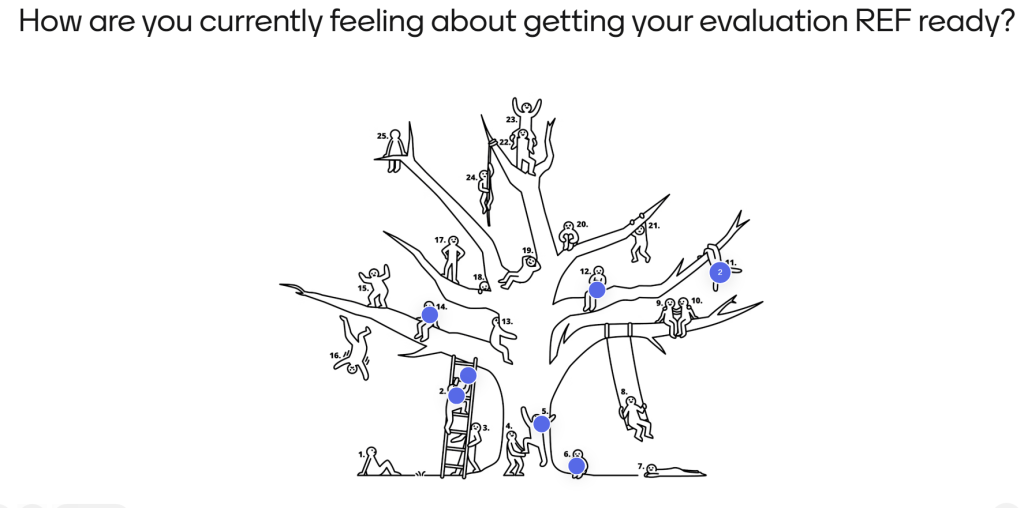
This diversity set the tone for an open, honest discussion about what evaluation looks like for us in the context of REF 2029.
Tools of the Trade (and Their Limits)
Participants shared the frameworks they’re currently using, with logic models and theory of change approaches emerging as common favourites. These tools help clarify intended outcomes and pathways to impact – but they’re not a silver bullet.
Across the discussion, several shared challenges surfaced:
- Data gaps: Not everything we need to evidence impact is being captured
- Time and resource constraints: Particularly acute in smaller institutions, and amongst the current climate in the higher education sector.
- Leadership expectations: Pressure to demonstrate high-level (and sometimes unrealistic) impact metrics
- Attribution challenges: The enduring difficulty of linking research activity to long-term societal change
In short, while frameworks exist, applying them meaningfully – and proportionately- remains complex.
The Breakout Conversations: Shared Challenges and Shared Solutions
We worked through a series of prompts to guide the discussion, all of which have been neatly captured on a Padlet which can still be accessed here. These included reflecting on where our roles sit within REF- SPRE, Engagement & Impact, or both- and mapping current projects against these areas. We also shared the tools and frameworks we’re using, before turning to data: what we need, what we already have, and where the gaps lie. Finally, we explored the challenges we’re facing in evaluation, and began to unpack practical ways to address them.
In smaller groups, participants dug deeper into their experiences. Despite differences in context, the themes were strikingly consistent:
- Limited data availability makes retrospective evaluation difficult
- Evaluation is often an afterthought rather than designed in from the outset
- Communication about evaluation priorities is not always clear across institutions
But alongside these challenges came practical, forward-looking ideas:
- Build evaluation in early: Develop evaluation plans before projects begin, not after they end
- Coordinate across teams: Break down silos between research, engagement, and evaluation functions and work with different teams across your organisation, e.g. HR, REF, researcher development, Impact, public engagement, outreach, widening participation etc…
- Be proportionate: Focus effort where it adds most value, rather than trying to measure everything
A Growing Community
One of the strongest threads running through the session was the appetite for connection. REF evaluation can feel like a niche space – but clearly, there’s a growing community of professionals grappling with similar questions.
A key next step is exploring the creation of a LinkedIn group for dedicated reflections on evaluation practice – a space to share resources, ask questions, and continue the conversation between sessions. Watch this space for updates on this…
What’s Next?
Following the session:
- We’re exploring the setup of a dedicated LinkedIn network for evaluation in the higher education sector
- Participants are diving deeper into shared resources on evaluation frameworks
- New connections are already forming (including at events like the NCCPE Engage Summit)
- Future sessions are being planned- including a focus on ethical evaluation which will be coming up next.
Final Thoughts
If there was one takeaway from our first EvaluaTea, it’s this:
there’s no single “right” way to approach REF evaluation and there is humungous value in climbing the multi-faceted branches of REF 2029 together!
By creating space for open discussion, shared problem-solving, and collective reflection, we can move towards evaluation approaches that are not only robust, but realistic and meaningful.
If you’d like to be part of the conversation, we’d love you to join us at a future session…More information and how to join here.
☕ The kettle’s always on.


